
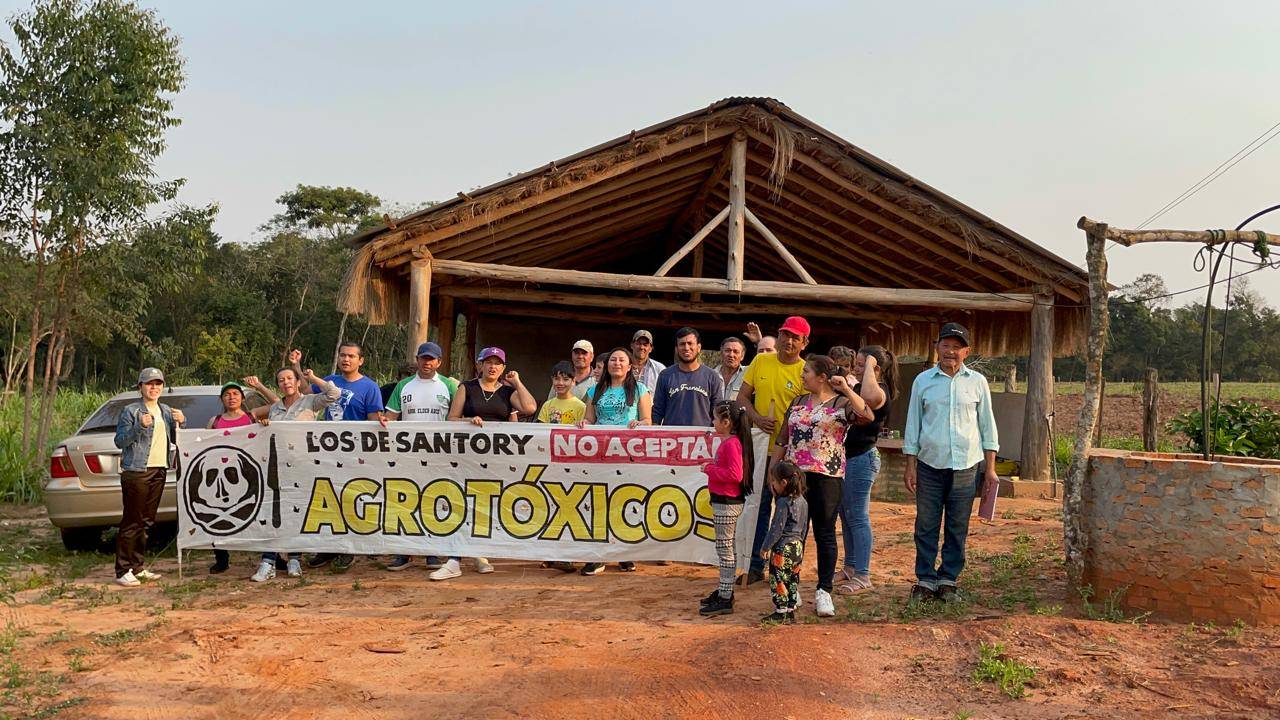

The fight against agrotoxics in Paraguay dates back to the arrival of genetically modified soybeans, which came bundled with a technological package. This package includes the use of fertilizers, insecticides, pesticides, and other desiccants. Combined with other elements, it has sparked continuous confrontation with the peasant population. While the intensity of this resistance has fluctuated over time, it has been shaped by the economic and political power wielded to impose the agribusiness model in the country. This aggressive model took hold forcefully, displacing entire communities.
In the first five years, it was estimated that 9% of the rural population was displaced. Today, statistics show that this percentage is much higher. In this context, resistance has taken various forms, becoming particularly pronounced through the struggle led by the Organización de Mujeres Campesinas e Indígenas (CONAMURI) following the tragic death of Silvino Talavera, an eleven-year-old boy and the son of a compañera, due to agrotoxic fumigations.
This heartbreaking incident spurred an intense campaign called “Justice for Silvino,” which brought the case to court. Although a favorable verdict was achieved, the sentence was ultimately not enforced.
As a result, this outcome galvanized other organizations and the broader peasant movement to strengthen their resistance. The impact of agrotoxics on human health, domestic animals, and livestock has been profoundly negative and alarming throughout the territory. In addition to harming peasant economies, these chemicals have devastated biodiversity and fruit species. In Paraguay, this struggle has become a significant catalyst for reinforcing the fight against agrotoxics across South America.
Through CONAMURI and CLOC-Vía Campesina, the debate intensified, fueled by the actions born from this struggle. Silvino Talavera’s memory is now embedded in the mystique of organizations across the continent, and wherever his name is spoken, it evokes a fervent desire for justice. At the VI Conference of La Vía Campesina, held in Indonesia in 2013, organizations from the region launched the Continental Campaign Against Agrotoxics and For Life, bringing with them a wealth of experiences in denouncing and addressing the impacts of the hegemonic production model.
This struggle also led to the formation of the National Coordination of Agrotoxic Victims, uniting peasant, Indigenous, and neighborhood organizations along with state entities to report abuses suffered by rural communities due to pesticide fumigations. This collective effort gave rise to Ñamosêke Monsanto, a platform dedicated to raising awareness about the situation in agribusiness-affected areas, often overlooked by mainstream media.
The resilience of the people has been remarkable. Organizations have observed that, in recent times, agrotoxics have been deliberately used to displace communities. In some cases, Indigenous communities have been indiscriminately fumigated. Today, the fight has been reignited because pesticide-related cancer cases are steadily increasing.
What Do We Do as an Organization?
We resist with living barriers: people come out to face the tractors. We demand an end to fumigations by tractors and, above all, by wide-reaching airplanes. For now, our resources do not allow for a widespread resistance, but we have succeeded in limiting fumigations to backpack sprayers, thereby reducing exposure. However, we must continue advancing, step by step, toward a total ban.