
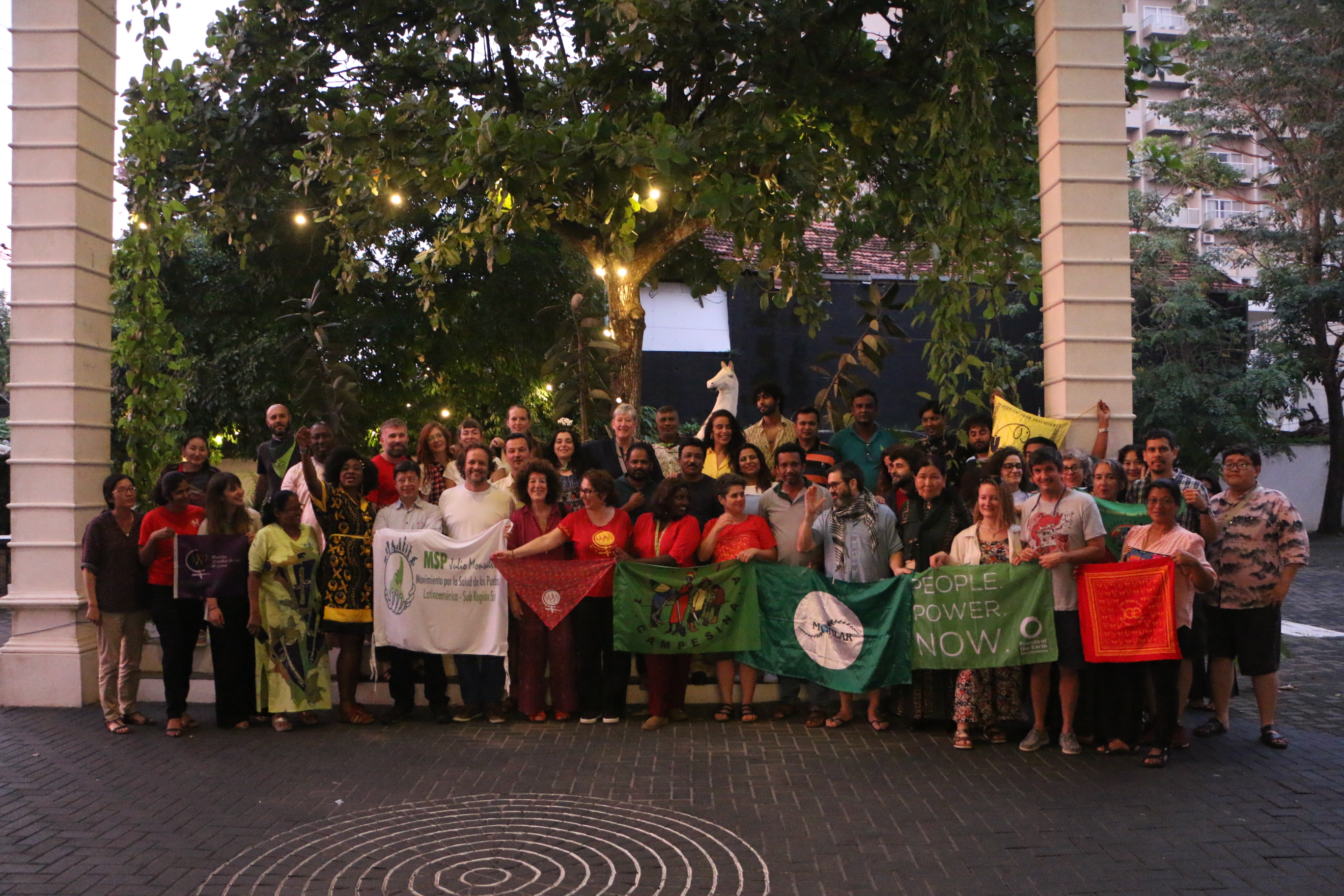

The 3rd Nyéléni Global Forum, taking place in Sri Lanka in September 2025, will be a landmark moment in our collective struggle for systemic transformation. It is the most important gathering of grassroots forces committed to building a world beyond capitalism, colonialism, patriarchy, racism, and fascism.
The Forum will bring together a powerful constellation of movements and communities—Indigenous Peoples, peasant farmers, fishers, pastoralists, agricultural workers, artisans, feminists, migrants, wage workers, the urban poor, social and solidarity economy activists, consumers, health workers, artists, and researchers—united by a shared vision: to build people’s economies and democracy, promote peace and international solidarity, advance food sovereignty and agroecology, defend land and territories, ensure health for all, and achieve climate justice and energy sovereignty.

A political space for Systemic Transformation
The 3rd Nyéléni Global Forum will serve as a space of convergence, strategy and solidarity. Its main goals are to:
- Develop a shared analysis of the interconnected struggles and global challenges we face.
- Recognize and celebrate our cultural and spiritual diversities in the collective struggle.
- Provide a space to exchange knowledge, experiences, and build alliances across movements and regions.
- Build new joint strategies and a common vision for just and resilient societies.
The Forum envisions a world where people rise above profit — organized in resistance to crush capitalism, colonialism, racism, patriarchy, and fascism — making systemic transformation a reality for all.
A global process of mobilization
The road to the 3rd Nyéléni GlobalForum is itself a participatory and movement-led process. It is currently organized into six regional processes, all of which are coordinated and articulated through a Global Steering Committee composed of social movements and grassroots networks. Alongside them, a group of allied non-governmental organizations (NGOs) contributes critical analysis and technical expertise in solidarity with the movement.
The process has already brought together regional assemblies, thematic discussions, and consultations that feed into the content, vision, and demands of the global convergence. These regional contributions will form the foundation of the work at the Forum in Sri Lanka, where they will be brought into cross-regional and cross-thematic dialogues to build unified proposals and action plans.
But the Forum is not the final destination—our goal is not an event. The Nyéléni process is about building systemic transformation through shared actions that we define and carry forward together long after the Forum concludes.

Expanding alliances, confronting interconnected crises
Today, our process is enriched by the voices and experiences of those advancing food sovereignty, agroecology, climate justice, feminist and solidarity economies, the vision of buen vivir, struggles for health for the peoples, just and feminist energy transitions, energy sovereignty, and community-led control over forests, lands, and territories.
This convergence strengthens our capacity to collectively respond to the interrelated crises of climate, food, health, inequality, and displacement—toward a future where our transformative proposals are not slogans, but realities built from the ground up.
The Venue – Kandy, Sri Lanka
Hosting the 3rd Nyéléni Global Forum in Sri Lanka brings both inspiration and responsibility. This island nation is navigating a complex social, economic, and political transition that mirrors many global struggles.
Political Context
In 2024, Sri Lanka witnessed a historic shift with the election of Anura Kumara Dissanayake, leader of the National People’s Power (NPP) coalition, as president. This marked a break from 76 years of traditional political elites since independence from British rule. With a two-thirds parliamentary majority, the new government has pledged social reforms, particularly in rural and agricultural policy.
While there is hope for pro-people agricultural reforms and rural development, Sri Lanka remains entangled in IMF and World Bank structural adjustment programs. The tension between progressive aspirations and neoliberal constraints remains a key political challenge.
Economic and Social Realities
The Sri Lankan economy shows fragile signs of recovery, with modest 3.5% growth, lower inflation, and support from tourism and remittances. However, deep structural problems persist:
- Over 100% of GDP in public debt,
- High poverty rates (1 in 4 people),
- Continued emigration of workers abroad.
While the country makes progress in digital services and infrastructure, many families still struggle to afford food, healthcare, and education. The Aswesuma program offers some social protection, but it’s insufficient for the growing number of families in need.
Women often face violence, low wages, and limited financial access. LGBTQ+ communities experience legal and social discrimination, with little institutional support. Mental health issues are widespread, especially among marginalized groups.
Despite offering free healthcare and education, austerity-driven budget cuts have weakened public services. In rural and post-war regions, challenges are compounded by unresolved legacies of conflict, including landmine clearance and hidden caste and ethnic discrimination.
By choosing Sri Lanka as the host, the Nyéléni process affirms its solidarity with peoples in resistance — those confronting crises while building hope and alternatives. The Forum will work with local governments and grassroots movements, ensuring the space reflects the voices and realities of those most affected.
In this context, the Forum becomes more than a gathering. It becomes a political act: rooting the global food sovereignty movement in the lived struggles of the Sri Lankan people and strengthening global alliances for justice and liberation.
Why we gather in 2025
In a time of intensifying social, economic, and environmental collapse, the 3rd Nyéléni Global Forum is a call to organize. We come together not only to resist, but to build—across territories, sectors, and generations.
In September 2025, over 500 participants from 80+ countries will gather in Sri Lanka to consolidate a common political direction and shared action plan for the years ahead. We will build on our grassroots power to shape global debates, influence policy spaces, and drive forward the transformation our communities demand. But the goal of the process is not the forum itself, but systemic transformation through actions we will define and implement together in the years ahead.
You must be logged in to post a comment.