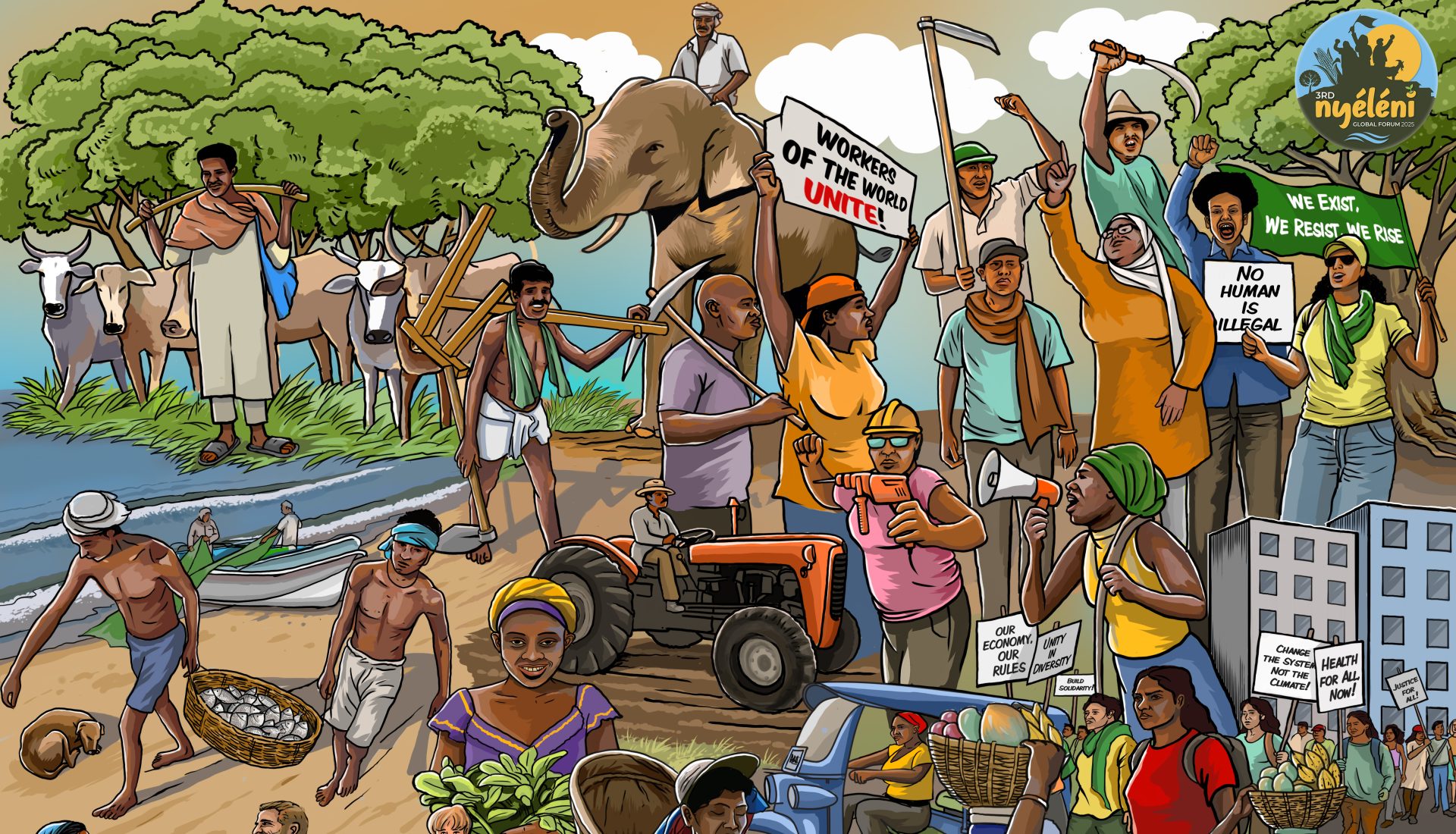

For a food system based on agro-ecology and food sovereignty
Article by REAS, the Network of Networks of Alternative and Solidarity Economy of Spain published in La Revista Soberanía Alimentaria (here you can read its …

Article by REAS, the Network of Networks of Alternative and Solidarity Economy of Spain published in La Revista Soberanía Alimentaria (here you can read its …
We are calling for a new mobilization within and beyond the food sovereignty movement, to build our response at both global and local levels, and tighten alliances with climate justice, antiracism, health, labour, feminist, and social and solidarity economy movements and organisations. Systemic transformation is now or never.
Recognizing the power of people’s movements, we aim to strengthen solidarity and unity by bridging local and global struggles. We are striving to adopt an intersectional perspective to address the multi-dimensional global crisis effectively.
This animation film succinctly explains the Food Sovereignty principles. It explains how Food Sovereignty places us – the peasants and all other small-scale food producers- at the heart of food systems, instead of powerful corporations, by building on the principles of solidarity, collectivism and social justice. Food Sovereignty defends our past, present and future generations, and is an alternative to a destructive and harmful industrial food system.
As Indigenous Peoples, we affirm that the concept of a just transition as it is currently presented is not true, as it implies initiatives and proposals driven by transnational corporations and States to implement and consolidate the free-market economic model, neoliberalism, and deepens the inequalities of the capitalist system.
Under the eye of Nyéléni, an African woman who defied discriminatory regulations and burned with creativity and agricultural progress, we will find the energy to …
NYÉLÉNI was the inspiration for the name of our Forum for Food Sovereignty in Sélingué, Mali. Nyéléni was a legendary Malian peasant woman who farmed and fed her peoples well – she embodied food sovereignty through hard work, innovation and caring for her people. We, peasant farmers, pastoralists, fisherfolk, indigenous peoples, migrant workers, women and
young people, who gathered at Nyéléni 2007 are food providers who are ready, able and willing to feed all the world’s peoples.
In February 2007, 600 delegates from every corner of the globe gathered in Mali, uniting diverse voices across society with a shared passion for agriculture and food justice. This historic meeting reaffirmed the right to food sovereignty, defining its deep economic, social, ecological, and political impact. It marked the beginning of a global movement dedicated to securing food sovereignty as a fundamental right for all.


You must be logged in to post a comment.