Nyéléni Latin America and the Caribbean

Health, Food Sovereignty, and Gender Justice: A conversation with Marcos Filardi

In this multimedia article, we explore how agribusiness—focused on generating profits rather than feeding people—causes hunger and disease. The dominant food system, controlled by large corporations, endangers the lives of marginalized communities through the mass production of ultra-processed foods and the indiscriminate use of agrochemicals.

Defending the Land is defending the Environment and Life: An urgent call for Territories

In this interview, Saúl Vicente Vázquez highlights the urgent struggle of Indigenous peoples to defend their lands as a vital act of protecting the environment and sustaining life itself. He emphasizes the inseparable connection between territorial rights and environmental justice, calling for collective action to safeguard Indigenous territories against exploitation and destruction. Saúl’s testimony underscores the need for global recognition of Indigenous sovereignty as essential to a just and dignified future for all.

World March of Women : ON THE ROAD TO FOOD SOVEREIGNTY

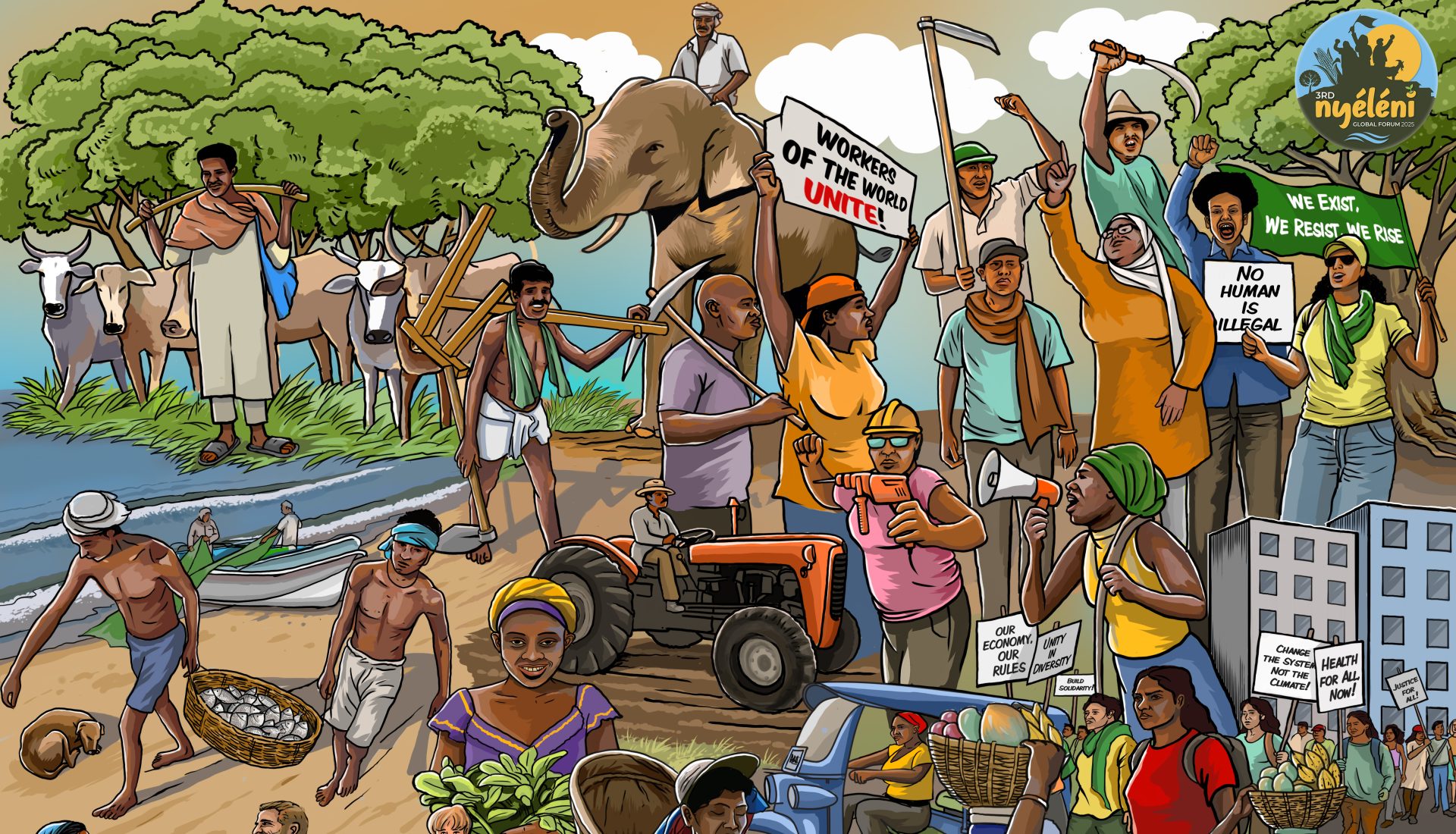
Today, in the run-up to the 3rd Nyéléni Global Forum, we make an urgent call to unite and act collectively against the capitalist system that continues to advance in a destructive and exploitative manner. It is crucial that we center solidarity, mutual respect, and self-criticism in our struggles, as only through these principles can we build a more just and sustainable future for all. The global challenges threatening our food sovereignty and social justice cannot be ignored.

Agrotoxics Kill: The Experience in Paraguay

The fight against agrotoxics in Paraguay dates back to the arrival of genetically modified soybeans, which came bundled with a technological package. This package includes the use of fertilizers, insecticides, pesticides, and other desiccants. Combined with other elements, it has sparked continuous confrontation with the peasant population. While the intensity of this resistance has fluctuated over time, it has been shaped by the economic and political power wielded to impose the agribusiness model in the country. This aggressive model took hold forcefully, displacing entire communities.